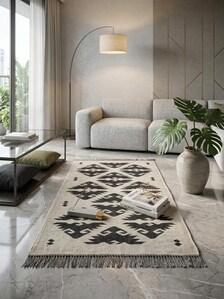
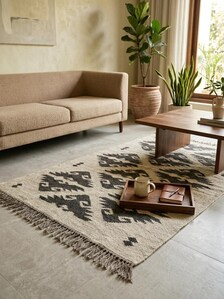
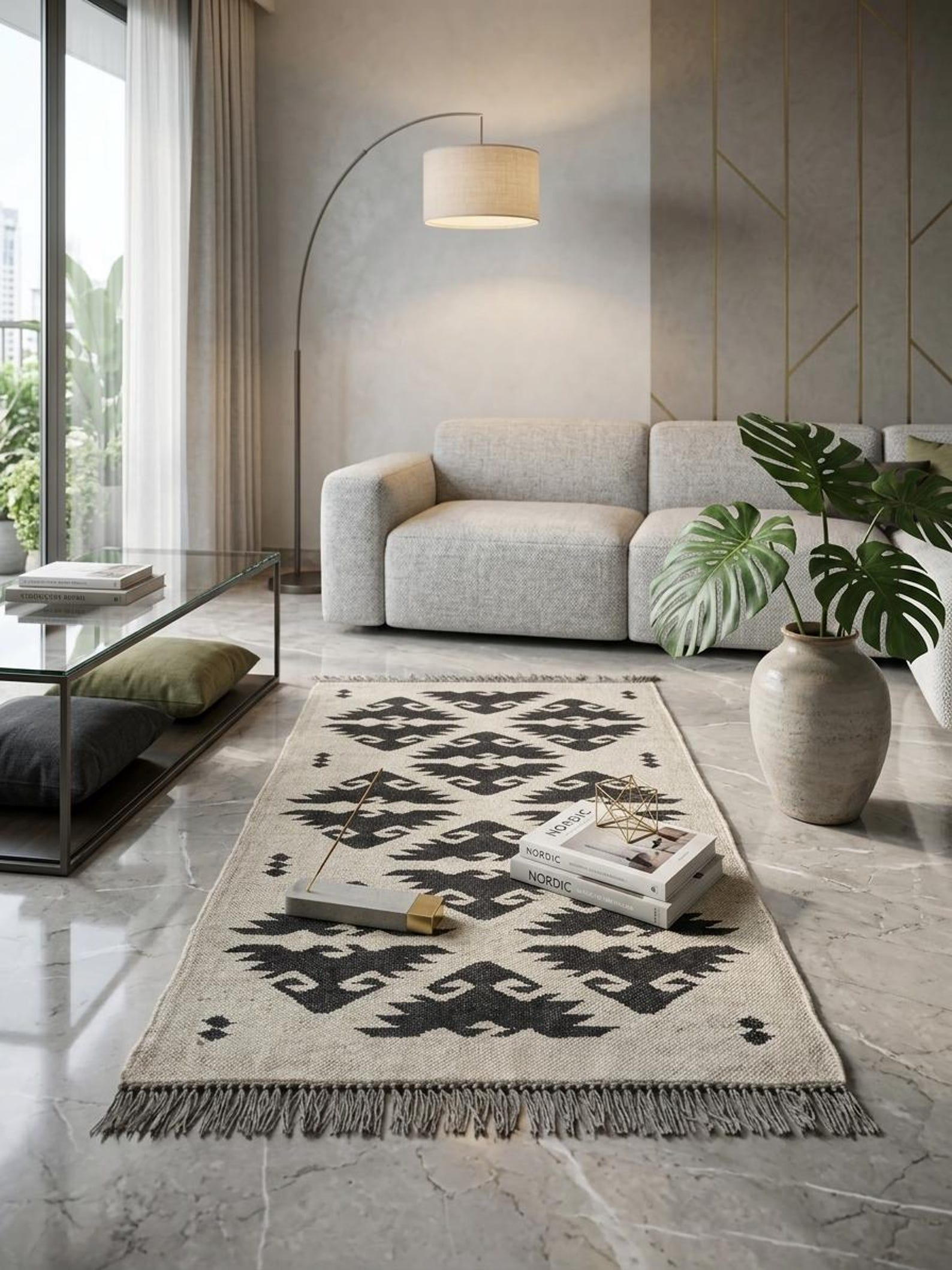
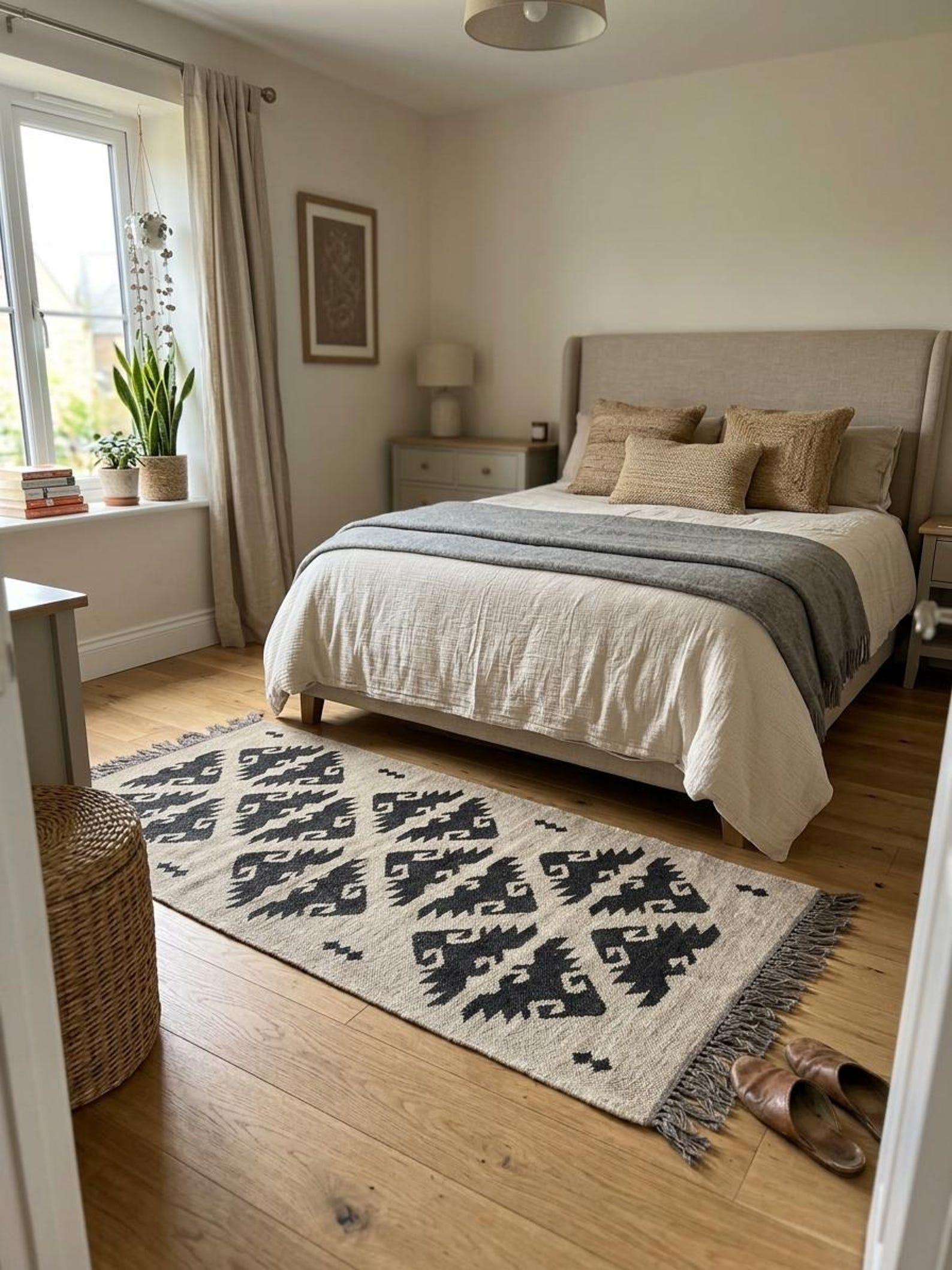
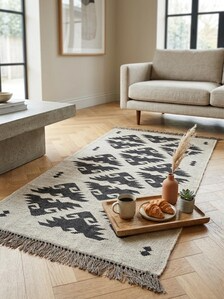
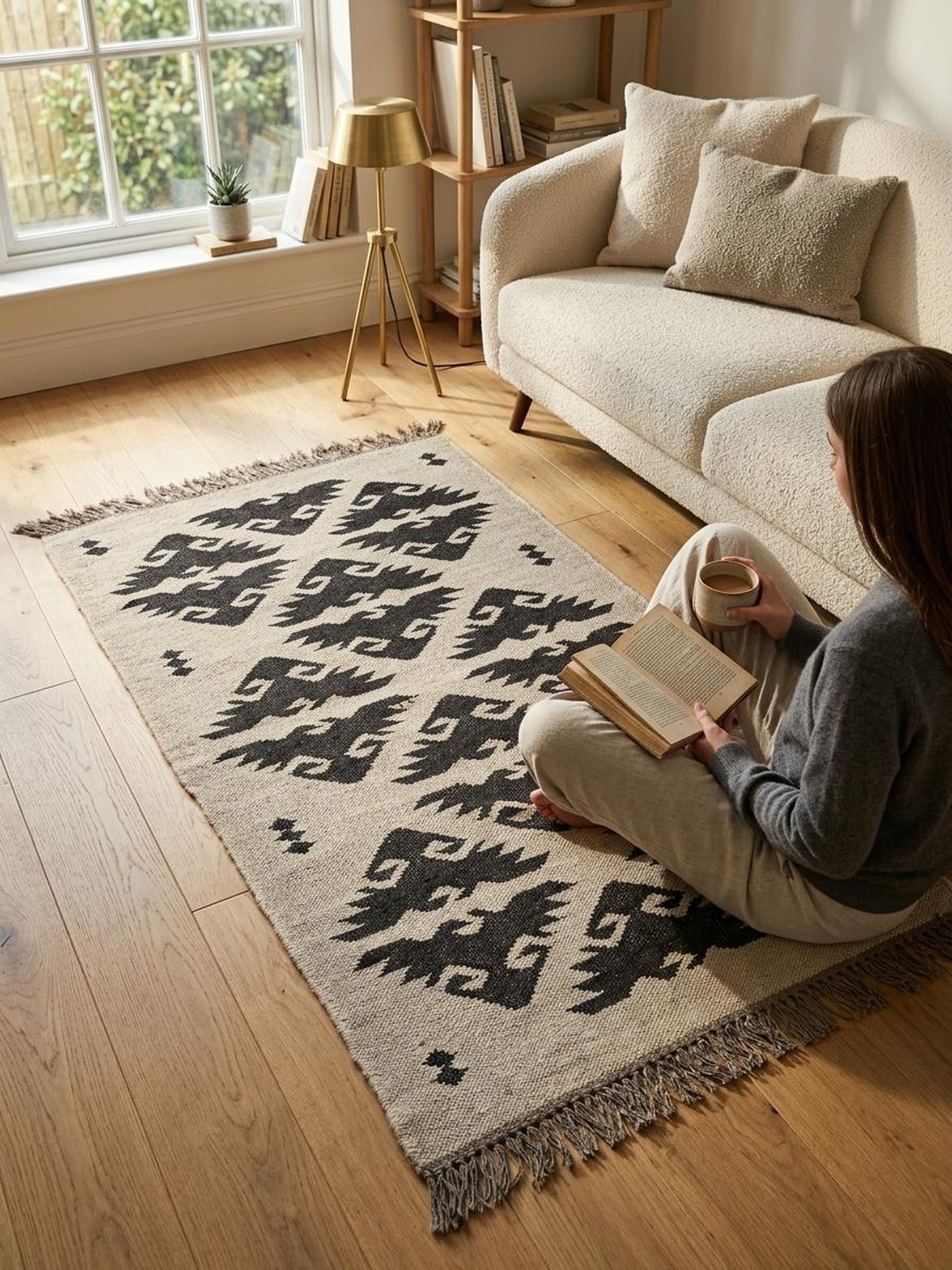
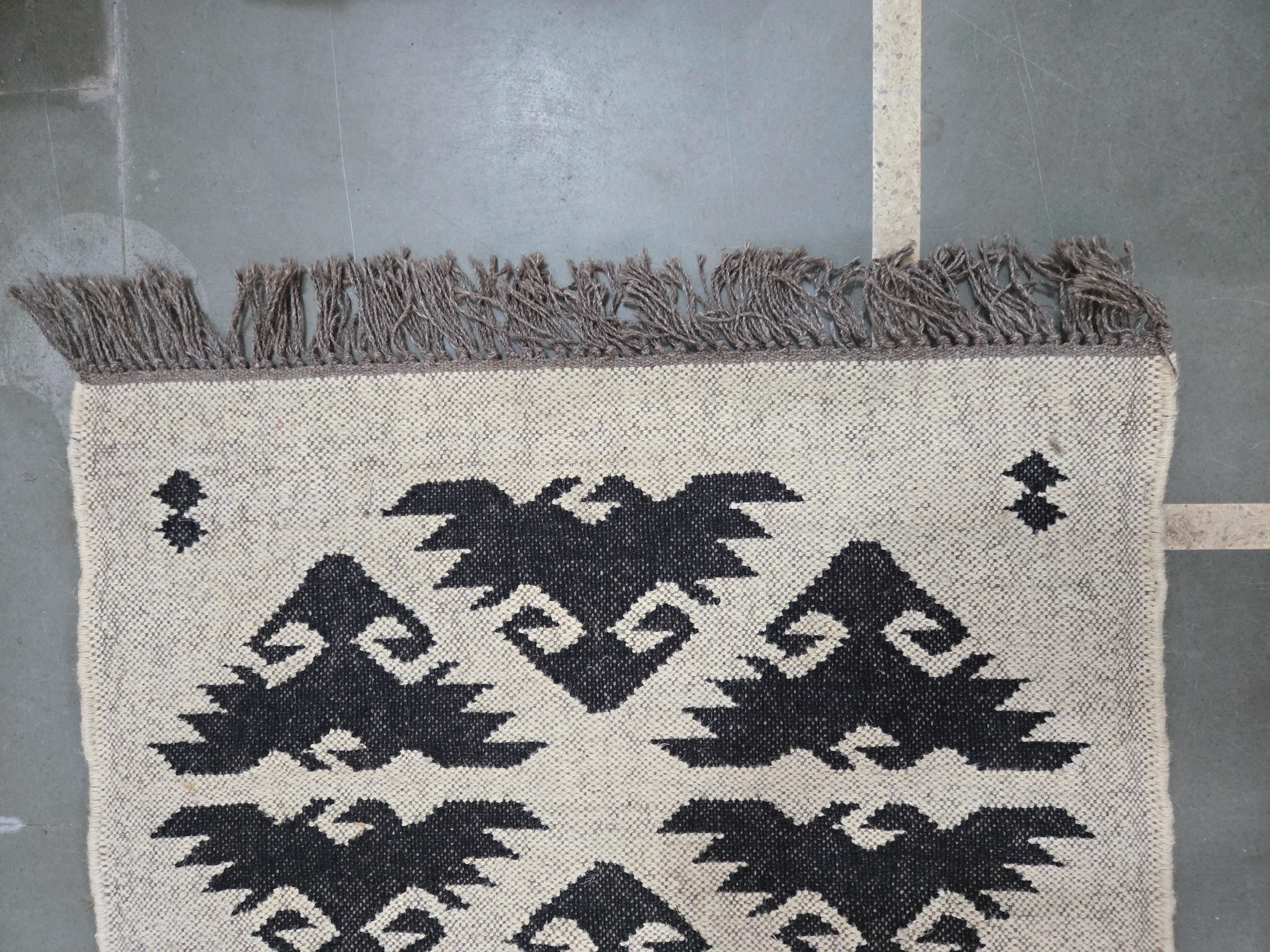
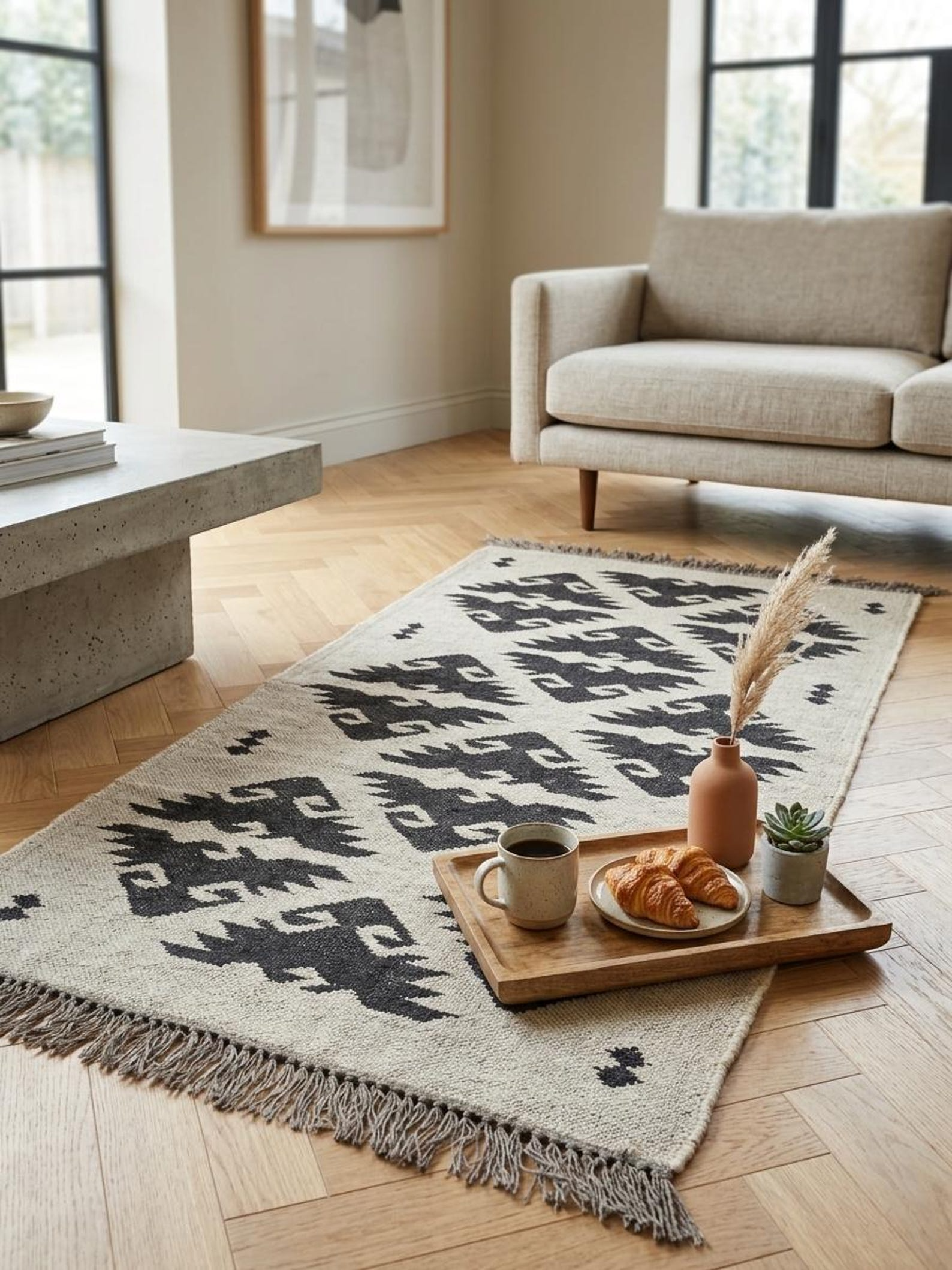
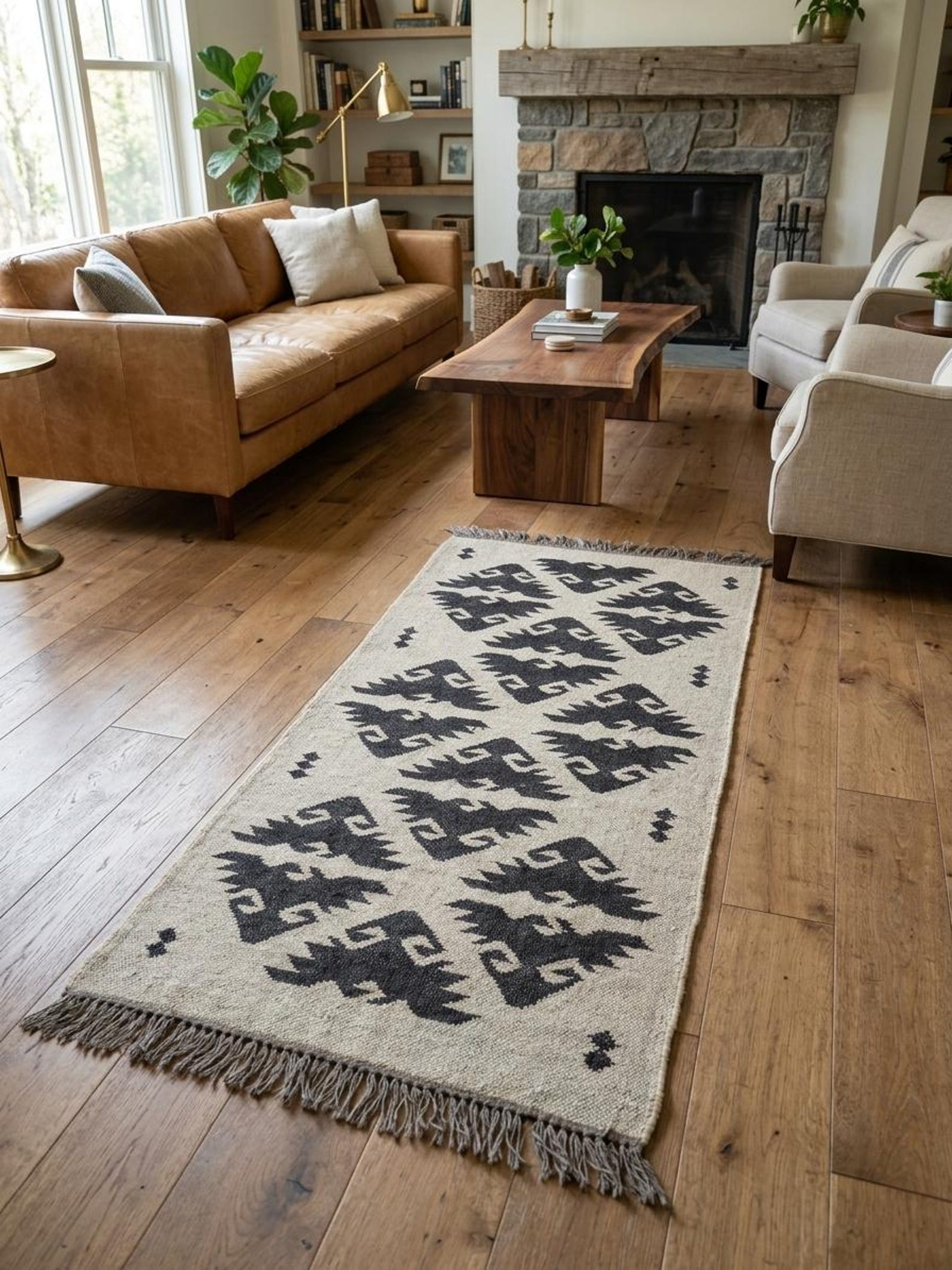
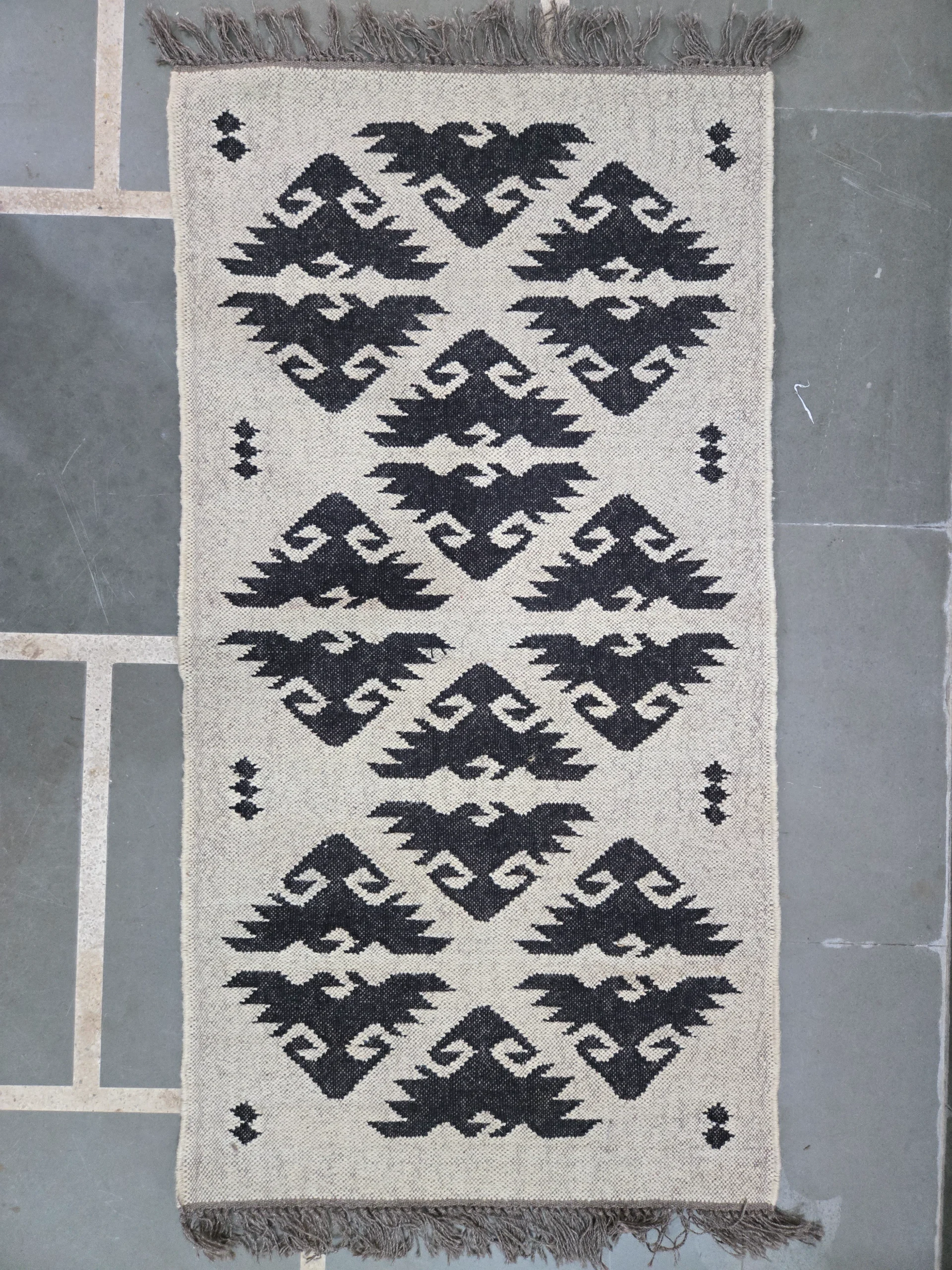
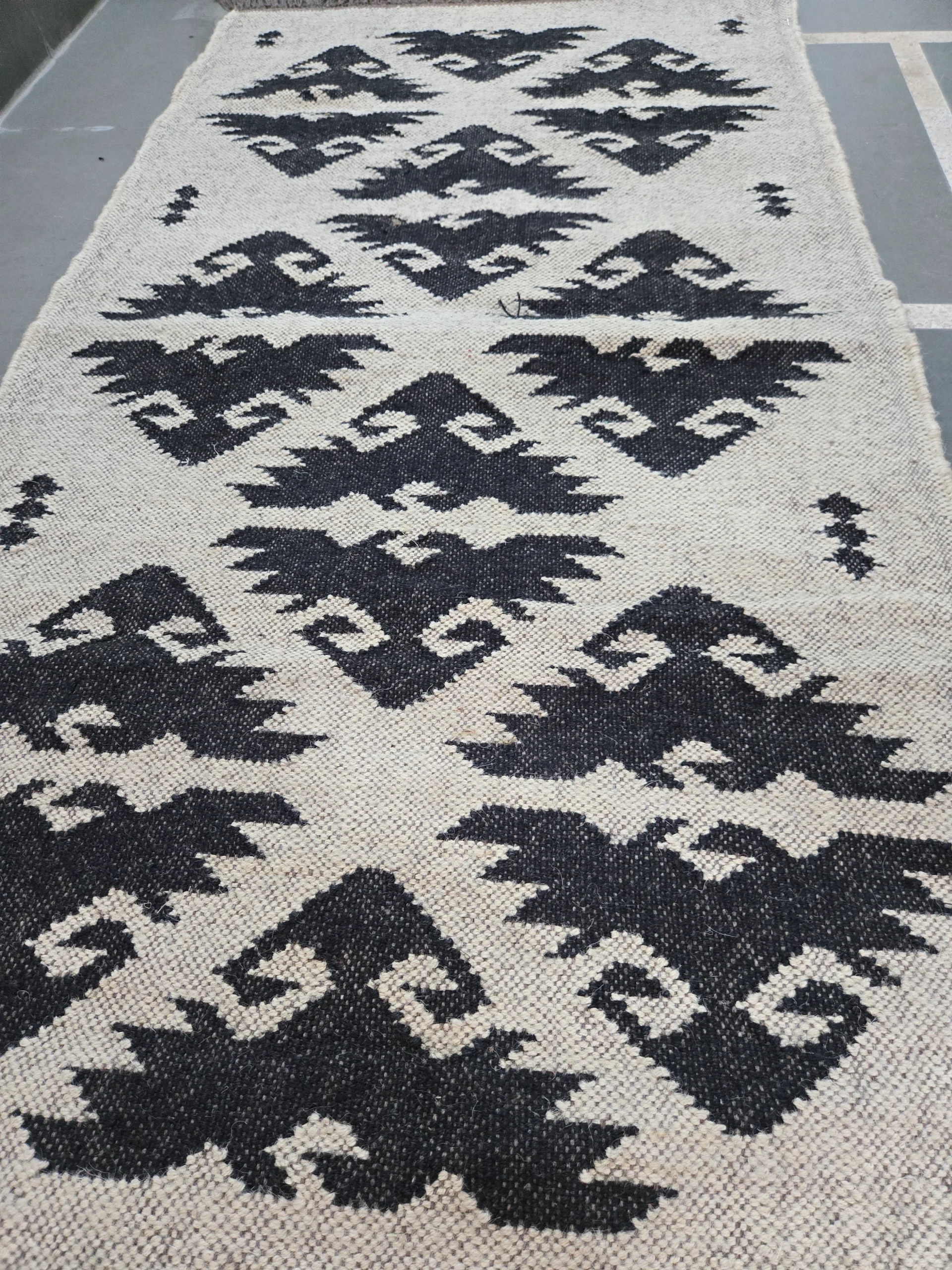
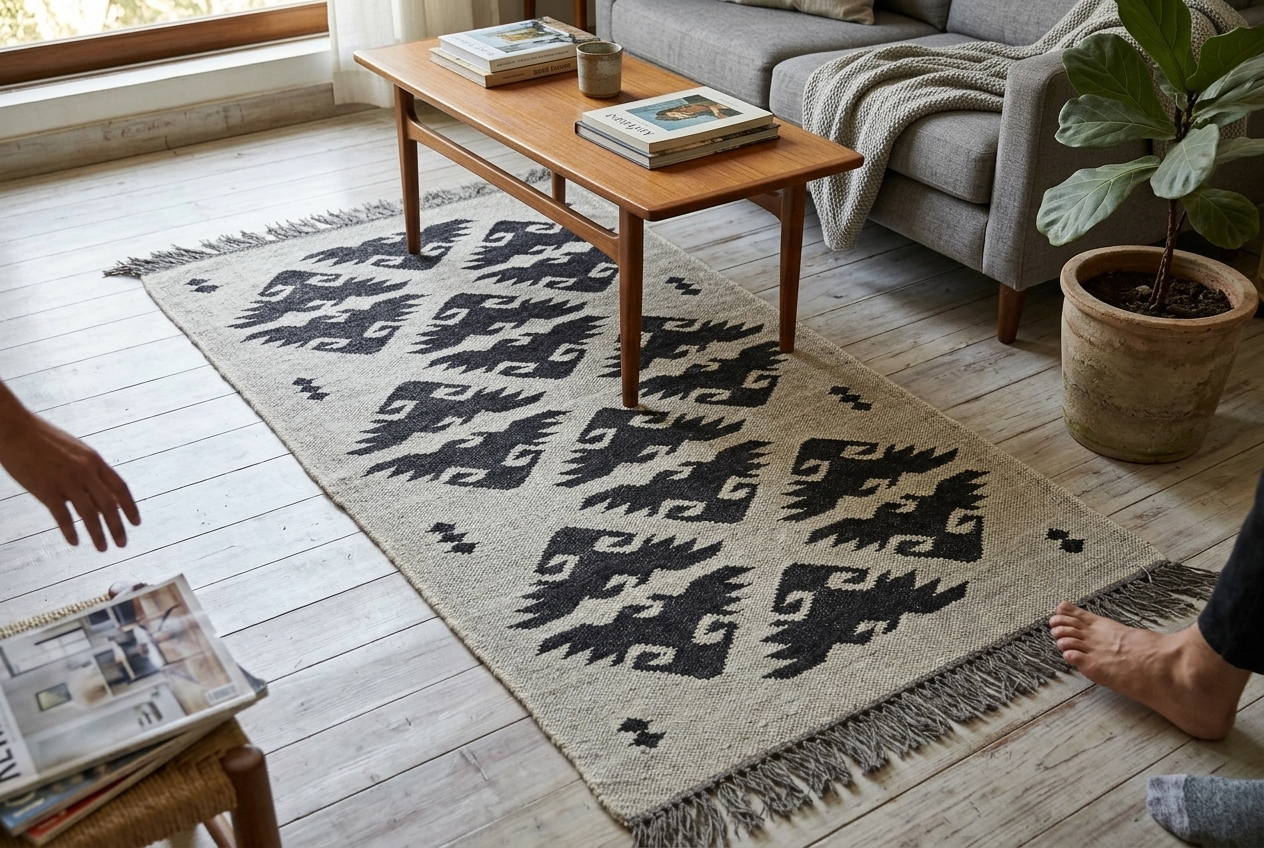
Two colors, one bold repeating shape, this piece proves how much impact a kilim can have without a wide palette. Every wing shaped motif here is woven in solid charcoal black against an unbleached ivory ground, stacked in mirrored pairs down the length of the rug so the pattern reads almost like a row of facing birds or arrowheads. Small diamond accents sit in each corner of the field, and the whole piece is finished with soft grey fringe on both short ends. This is a handwoven Indian rug built around contrast and repetition rather than color variety.
Where This Rug Fits Best
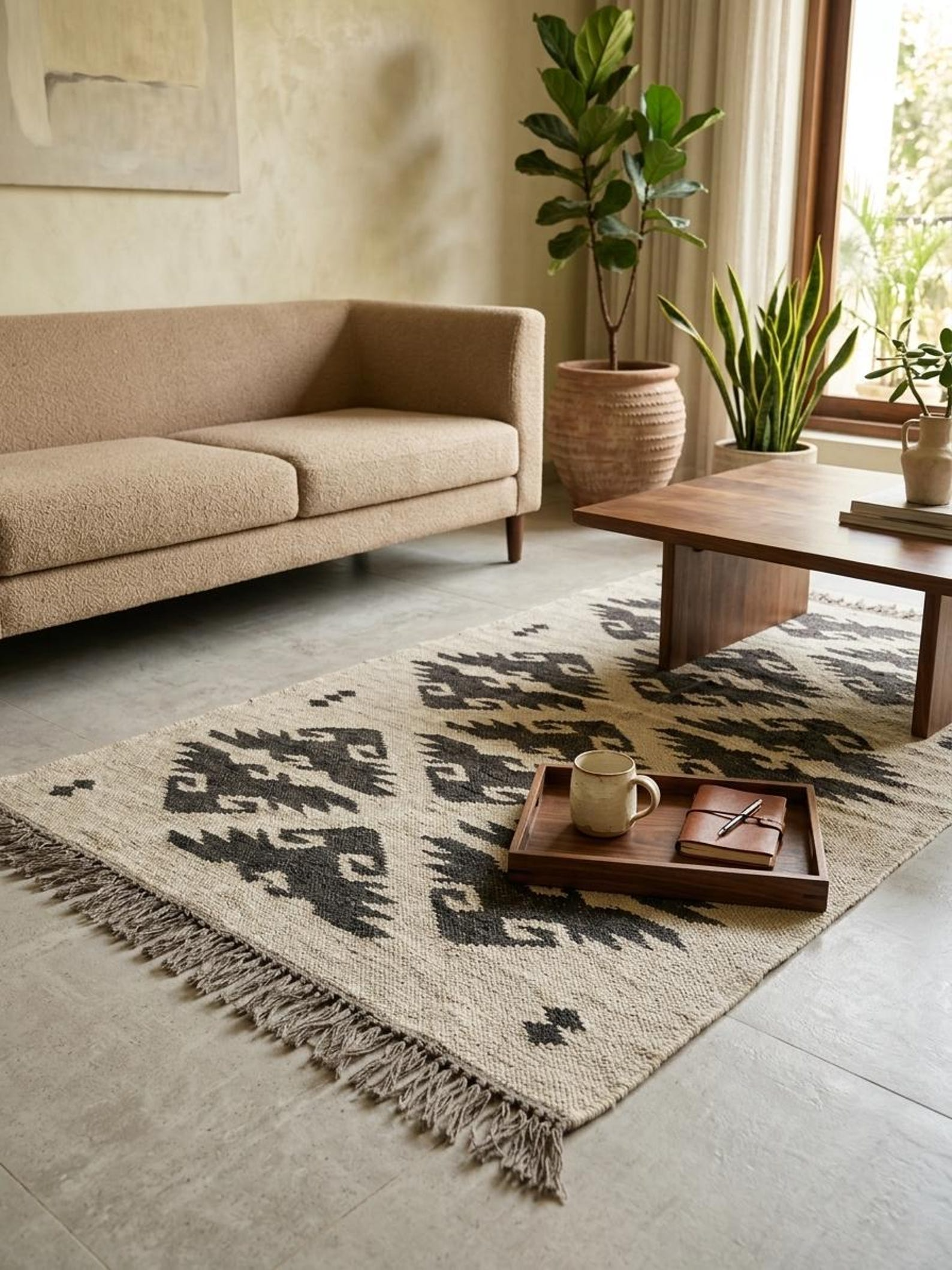
A strong two tone piece like this works best in a room that already has some warmth to balance the black and ivory contrast, think natural wood floors, leather furniture, or exposed brick. It suits a study, entryway, or reading nook with a bold black and white aesthetic, and it holds its own as a runner along a hallway, much like our boho hallway runner rug, or at the foot of a bed. Because the pattern repeats in clean, mirrored rows, it also suits a narrow space where a busier multicolor rug might feel cluttered.
If you already lean toward a black and white color story elsewhere in your home, this rug slots in without needing to be color matched to anything specific. For a finer black and ivory trellis, see our kilim area rug. It layers well over a plain neutral base rug for added texture, or works as a standalone statement piece in a smaller room. The bold scale of the motif means it reads clearly even from across an open plan space.
Inside This Handwoven Indian Rug
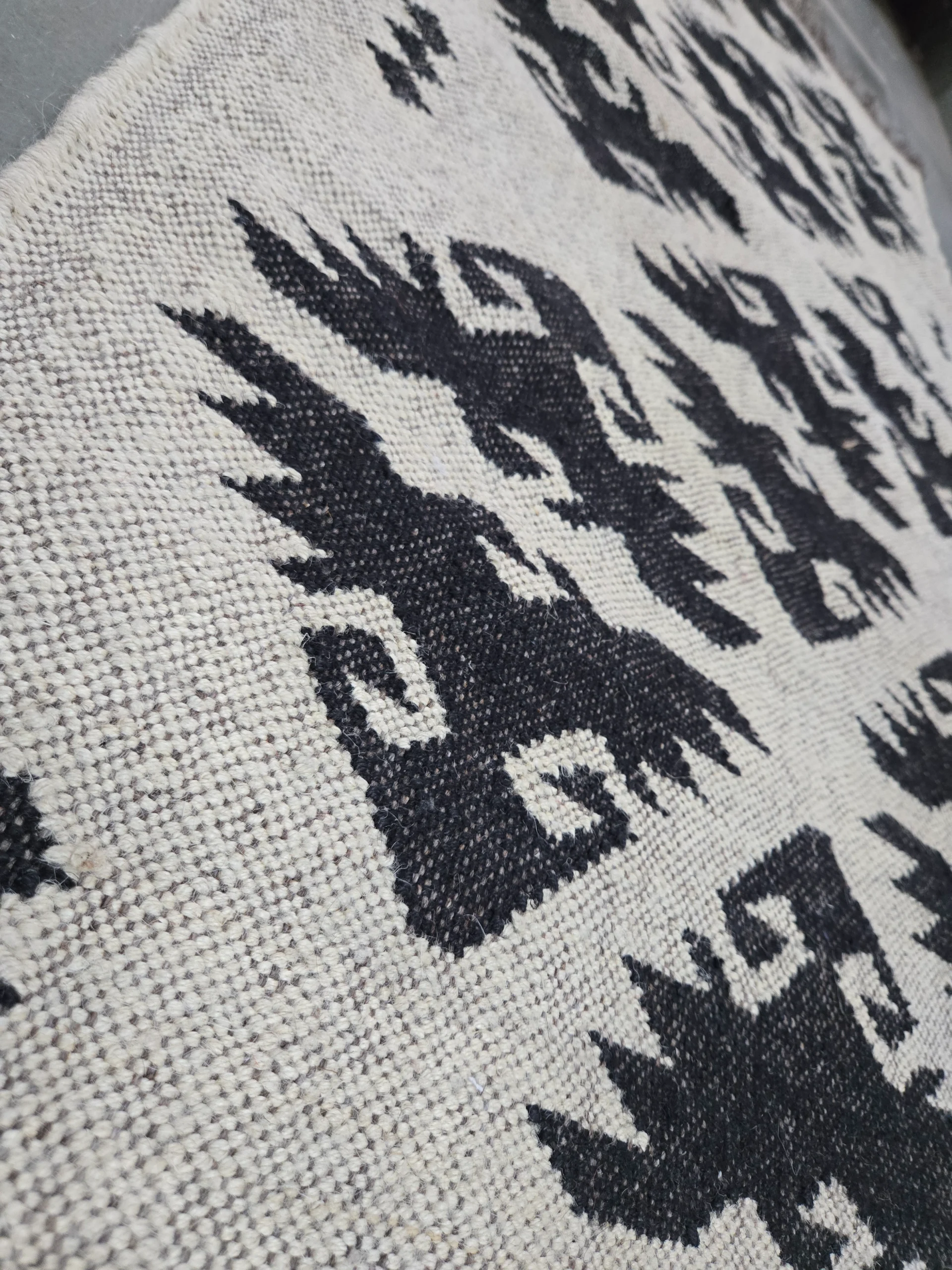
Woven flat on a traditional loom rather than knotted into a raised pile, this flatweave piece stays thin, flexible, and easy to fold for storage or travel. The wing shaped motif is a traditional tribal weaving pattern, built entirely from straight and stepped lines the way most kilim designs and Indian dhurrie rugs are, since curves are difficult to render cleanly in a flatweave structure. Every row was placed by hand, one weft pass at a time, which is why the mirrored pairs never come out perfectly identical from one to the next.
The base combines wool for the black motif work with a jute and cotton foundation underneath, giving the rug enough structure to lie flat while staying light enough to move or reposition easily. This construction is typical of a handmade wool jute kilim rug, where the wool carries the visible pattern and the jute blend does the structural work underneath.
What Sets It Apart
A few details worth knowing before you order:
- A strict two tone black and ivory palette, unusual among the more colorful pieces in this collection, and well suited to a tribal geometric area rug look
- Mirrored wing shaped motifs stacked in a clean, repeating rhythm rather than a scattered or asymmetric layout
- Grey braided fringe finished by hand on both ends
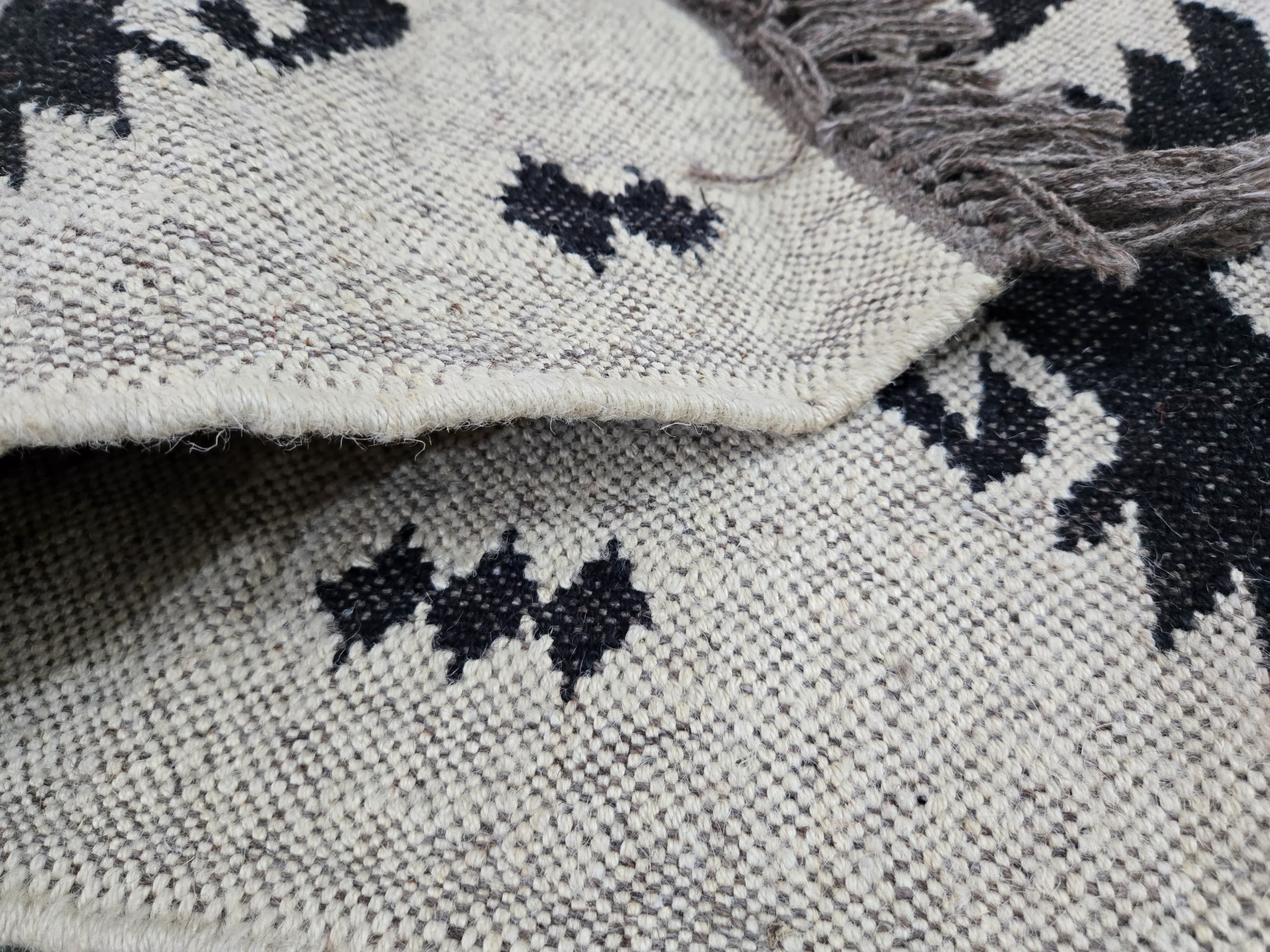
- A reversible kilim rug construction, so the piece can be turned over to reveal a second, slightly muted version of the same pattern, effectively giving you a backup design and extra wear life in one rug
- A tightly woven flatweave rug structure that resists shedding and needs no rug pad in most rooms
This kind of pattern has roots in regional weaving traditions across Rajasthan, where geometric motifs like wings, arrows, and diamonds are passed down through family workshops rather than copied from a printed template.
Available Sizes
This handwoven Indian rug is available in the following sizes:
2×6 ft, 2×8 ft, 2×10 ft, 2×12 ft, 2×14 ft, 2×16 ft, 2×18 ft, 2×20 ft, 3×5 ft, 4×6 ft, 5×8 ft, 6×9 ft, 8×10 ft, and 9×12 ft.
The longer runner sizes suit hallways, staircases, and entryways particularly well given how clearly this pattern reads at a distance. Not sure which size fits? Read our rug size guide. The 8×10 ft and 9×12 ft sizes work as a full living or dining room rug, and any size in between can be arranged as a custom order.
Care Instructions
Because this is a handwoven wool jute rug, care is straightforward but not identical to a synthetic rug. Vacuum on a low suction setting or shake it out regularly so dust does not settle into the base weave. Blot spills right away with a dry cloth and mild soap instead of soaking the area, since jute fibers absorb moisture slowly and need time to dry out fully. Rotating the rug every few months keeps wear even across the pattern, and using the reverse side occasionally spreads that wear out even further. For the full steps, see how to clean a kilim rug.
About Meera Exports
Meera Exports works with a small network of weaving families across Rajasthan, focusing on patterns like this one that come from long standing regional design traditions rather than trend driven prints. Each rug is woven to order, so the size and finish you receive is made specifically for your space.
Frequently Asked Questions
Is this rug reversible?
Yes, it can be turned over to reveal a second, slightly muted version of the same pattern, giving you a backup design and extra wear life in one rug.
What does the pattern represent?
A traditional wing shaped tribal motif, mirrored in stacked pairs down the length of the rug in solid charcoal black on ivory.
Will a black and white rug clash with a colorful room?
No, its two tone palette pairs easily with almost any existing color scheme, since there’s nothing to color match.
What sizes are available?
2×6 ft up to 9×12 ft, plus custom sizes on request.
Reviews
There are no reviews yet.