What Is a Dhurrie Rug? Meaning, Origin and How It Differs From a Kilim
You find a handwoven rug online and the listing calls it a dhurrie. A few clicks later, a rug that looks almost the same is called a kilim, and the price is different. Are they two different things, or one rug with two names? This guide settles it in plain language.
The short answer: A dhurrie rug is a flatweave rug made by hand on a loom in India. It has no pile, so the surface is thin and smooth, and in most handwoven pieces the pattern shows on both sides. Dhurries are traditionally woven from cotton or wool. They are close cousins of kilims, and the main differences are where the tradition began, the materials used, and the style of pattern.
What Is a Dhurrie Rug?
A dhurrie rug is woven, not knotted and not tufted. Weft threads travel over and under the warp threads until the design fills the surface, which leaves a firm, flat rug with no raised fibers at all.
- Here is what sets a dhurrie apart from a thick pile rug:
- There is no pile, so there is nothing to crush under furniture or trap dust deep inside.
- Most handwoven dhurries show the pattern on both faces, so they can be flipped.
- They are light, easy to roll up, and simple to move from room to room.
- Traditional materials are cotton and wool, and some Indian flatweaves also use jute.
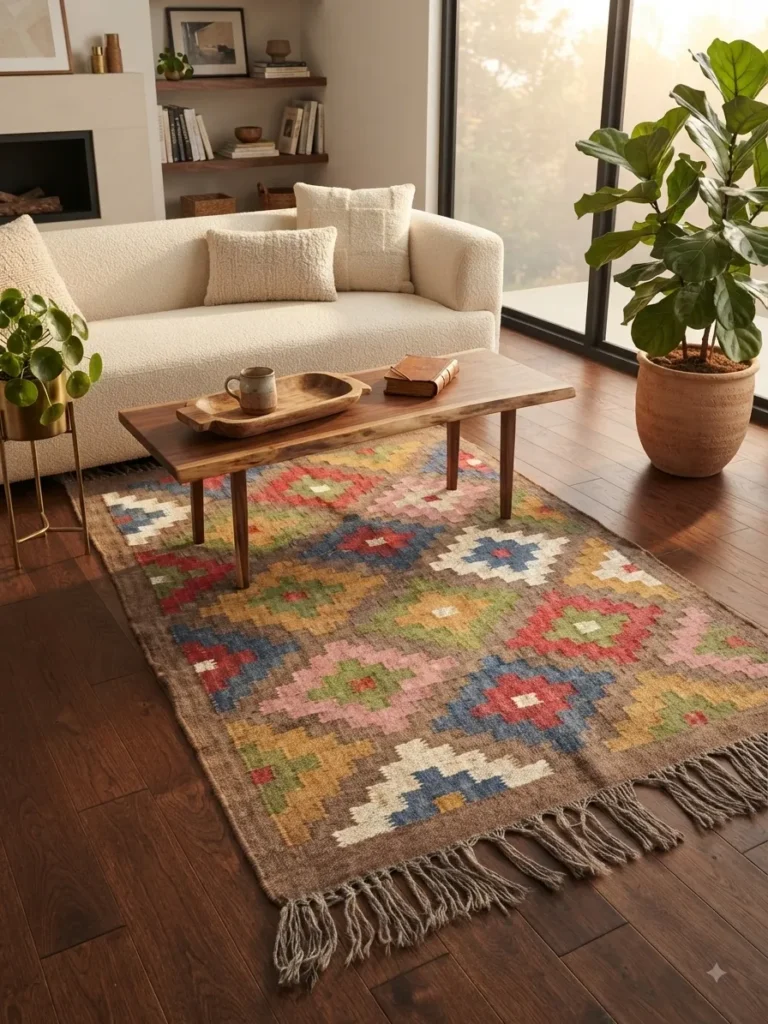
- Typical designs include stripes, grids, borders, diamonds and simple geometric repeats.
Dhurrie Rug Meaning: Where the Word Comes From
The word dhurrie comes from the Hindi word dari, which means a rug or carpet. You will also see it spelled durrie. In India the name has long covered woven floor coverings, bedding layers and meditation mats, and outside India it has become the everyday word for a flatweave rug with Indian roots.
How Is a Dhurrie Rug Made?
A weaver strings vertical warp threads on a loom and passes colored weft threads through them by hand, pressing each row down firmly so the weave stays dense. No knots are tied. The design is built row by row and color by color, which is why a single rug can take days to weeks to finish.
Our rugs at Meera Exports are woven by artisan weavers in and around Jaipur, Rajasthan, using this same flat weaving method. Small irregularities in the weave and slight shifts in dye are normal in handwork, and they are part of why no two pieces match exactly.
Dhurrie vs Kilim: What Is the Difference?
Both are flatweave rugs, which is exactly why people mix them up. Here are the differences that matter when you compare the two.
- Origin. Kilim is the name for flatweaves from Turkey, Persia, the Caucasus and Central Asia. Dhurrie is the Indian name for a flatweave rug.
- Materials. Kilims are most often wool. Dhurries are traditionally cotton, wool or a blend, and jute shows up in some Indian pieces.
- Pattern. Kilims are known for bold geometric motifs that carry symbolic meaning. Dhurries lean toward stripes, grids, bands and repeating shapes, often a little simpler.
- Weave. Classic kilims often use a slit tapestry technique, where blocks of color meet in sharp edges. Dhurries tend to have a tighter, more even surface, though weavers use more than one technique and exceptions are common.
- Feel. Cotton dhurries are usually thinner and more flexible. Wool and jute pieces feel firmer underfoot.
In everyday shopping the two words overlap. Flatweaves woven in Rajasthan are sold both as dhurries and as kilim style rugs, so the label on a listing does not always reveal the tradition. Judge the rug by its material, pattern and weave, not just the word.
For the Turkish and Persian side of the story, read our guide on what is a kilim rug. For the umbrella term that covers both, see what is a flatweave rug.
How to Tell a Dhurrie From a Kilim When You Shop
- Read the material line. Cotton or a cotton blend points toward a dhurrie. All wool with sharp, bold motifs leans toward a kilim.
- Look at the pattern. Stripes, grids and simple bands suggest a dhurrie. Large symbolic diamonds, hooks and medallions suggest a kilim.
- Flip it over. A true handwoven flatweave shows the design on the back too, with a few loose thread ends. A glued or fabric backing points to a different kind of construction.
- Check the origin details. A handmade listing should tell you where the rug was woven and what it is made of. If it does not, ask.
Are Dhurrie Rugs Durable?
Yes, when you match the rug to the room. Because there is no pile, a dhurrie does not mat or crush the way thick rugs do, and wool or jute versions are tougher than thin cotton ones. For hallways, entryways and busy living rooms, choose wool or jute. Cotton suits bedrooms and quieter corners.
Two habits make any dhurrie last longer. Put a non slip rug pad underneath on hard floors, because a flatweave has no cushioning of its own and can slide. Keep it away from standing water and from long hours of strong direct sun, which fades dye over the years.
Where Do Dhurrie Rugs Work Best?
The thin, flat build makes dhurries easy to place almost anywhere indoors.
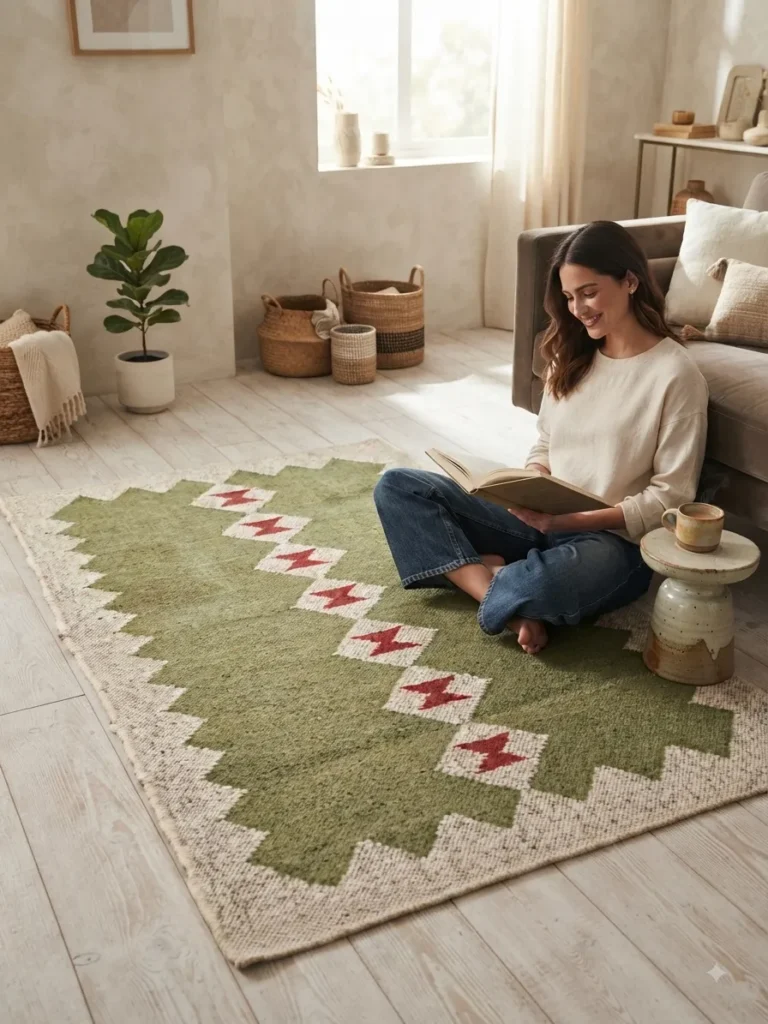
- Living room: in front of a sofa or under a coffee table, or layered over a larger jute rug for extra texture.
- Bedroom: at the foot of the bed or as a runner along one side.
- Hallway and entry: a runner such as 2×6 ft stays flat, so doors open freely.
- Dining area: chairs slide easily over a flatweave, which is a real advantage over a thick pile.
- Home office: a desk chair rolls smoothly across the surface.
Keep dhurries out of bathrooms and other damp spots, and use them indoors or in covered outdoor spaces only.
How to Choose the Right Dhurrie Rug
Size. Measure your space first. In a living room, leave about 6 to 8 inches of bare floor around the rug for a balanced look. Our rug size guide has a full chart in feet and cm for every room. Our handwoven rugs come in sizes from 2×6 ft runners up to 9×12 ft, and custom sizes can be requested.
Material. Pick cotton for light use, and wool or jute for busy rooms.
Pattern. Quiet stripes keep a room calm. A bold geometric design turns the rug into the focal point.
Color. Hold a swatch or photo up to your walls and sofa. Pick one or two colors in the rug that already appear in the room so everything ties together.
How to Clean a Dhurrie Rug
A flatweave has no pile to trap dirt, so cleaning is simple.
- Shake the rug outdoors, or vacuum both sides on suction only. Turn off the beater bar.
- Blot spills right away with a clean dry cloth. Press down, do not rub.
- For a stain, dab with a damp cloth and a little mild soap. Test a hidden corner first, since dye can bleed if the rug gets too wet.
- Let it dry completely, lying flat and out of direct sun, before you put it back down.
- Rotate the rug every few months and flip it now and then so wear spreads evenly.
Do not machine wash a wool or jute dhurrie. Some pure cotton dhurries tolerate gentle washing, but only follow the maker’s care label. When you are unsure, spot clean or ask a professional rug cleaner.
Handwoven Dhurrie Rugs From Jaipur
Meera Exports is a family run rug business based in Jaipur, Rajasthan. If you like the look described in this guide, browse our traditional Indian dhurrie rug, or see every handwoven flatweave in the Kilim Rug collection. Shipping is free worldwide, including the USA, UK, Canada and Australia, with delivery in 3 to 5 days.
Frequently Asked Questions
What is a dhurrie rug in simple words?
A dhurrie rug is a flatweave rug made on a loom in India with no pile. It is thin, smooth and, in most handwoven pieces, shows the same pattern on both sides.
What does dhurrie mean?
Dhurrie comes from the Hindi word dari, meaning a rug or carpet. It is also spelled durrie.
Is a dhurrie the same as a kilim?
Not exactly. Both are flatweave rugs. Kilim refers to the flatweave tradition of Turkey, Persia, the Caucasus and Central Asia, while dhurrie is the Indian name. In the market the two terms overlap, so check the material and pattern rather than relying on the label.
Are dhurrie rugs durable?
Yes. The tight, low profile weave resists crushing and matting. Wool and jute dhurries handle high traffic areas best, and cotton ones suit lighter use.
How do you clean a dhurrie rug?
Vacuum on suction only or shake it out, blot spills quickly, spot clean with a damp cloth and mild soap, and dry it flat away from direct sun. Avoid soaking, because dyes can bleed.
Do you ship dhurrie rugs internationally?
Yes. We ship handwoven rugs free worldwide, including the USA, UK, Canada and Australia, and delivery usually takes 3 to 5 days. Duties and taxes depend on the destination country, so please check our Shipping Policy.